
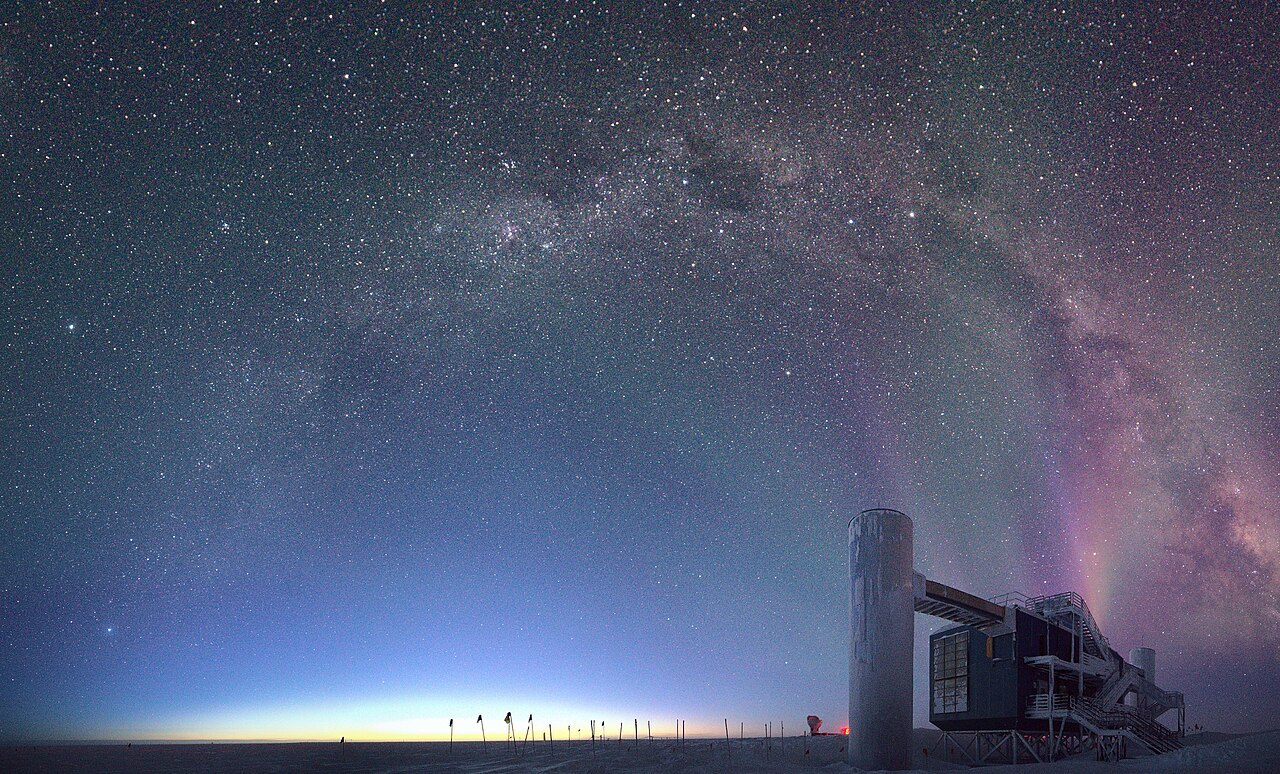
University of Wisconsin–Madison physicist Francis Halzen has been named a 2026 Nobel laureate in physics for work advancing high-energy neutrino astronomy, the university announced on 6 October. Halzen is a leading figure behind IceCube, an international observatory embedded in Antarctic ice.
IceCube uses thousands of sensors distributed through a cubic kilometre of ice to detect the faint signals produced when neutrinos interact nearby. Its 2013 identification of neutrinos from beyond the solar system opened a new way to investigate energetic cosmic sources. The recognition highlights research built through a large international collaboration and long-term support for polar instrumentation. Neutrinos complement light-based astronomy because they can carry information from environments that are difficult to study through conventional telescopes alone.